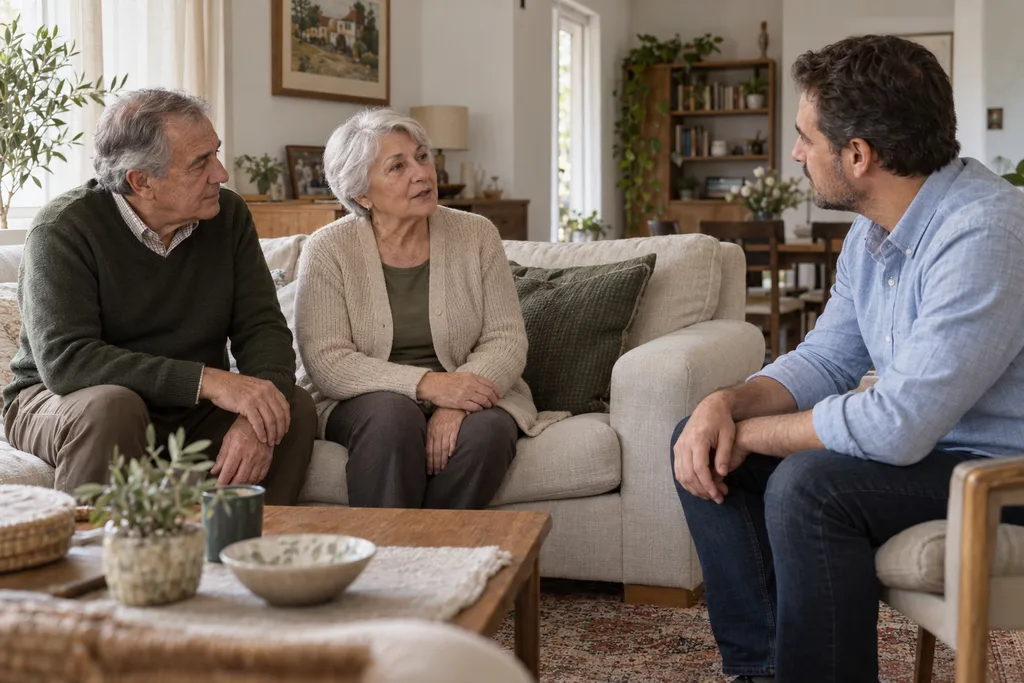

Review familiar routes
Walk together along the route from bed to bathroom, to the door and to the usual sitting place. Look at lighting, cables, loose rugs and items that require unnecessary reaching. Ask where the person feels uncertain. Larger changes such as rails or ramps need appropriate measurement and installation; an internet photograph does not prove a solution fits the home.
Fit mobility support to the person
For a walking stick, walker or wheelchair, ask for assessment, fitting and instruction. Check thresholds, turning space, transport and storage too. For physical activity, ask a professional what fits the person’s abilities and condition. Do not start a demanding programme from a video alone or borrow equipment without checking its fit. Choose achievable activities that the person actually wants to do.
Plan help, not only an alarm
If considering a personal alarm, clarify activation, coverage and who responds. Discuss what happens if the person cannot press a button. A sensor does not prevent every fall or guarantee rescue. The monitoring guide helps prepare questions; the response pathway must be confirmed with the provider and the people who have agreed to help. Keep that agreement accessible to everyone involved.